Prestige cosmetics companies represent the luxury tier of the beauty industry, where brands command premium prices through superior formulations, exclusive packaging, and aspirational positioning. Think Estée Lauder, Pat McGrath Labs, Tom Ford Beauty, and La Mer: these are the names you find in department stores and high-end beauty retailers, not your average drugstore shelf. The global prestige beauty market has experienced remarkable growth, with industry giants like Procter & Gamble making strategic moves to capture a larger share of this lucrative segment.
What separates prestige from mass-market cosmetics? Quality ingredients, innovative research-backed formulas, and that intangible luxury experience matter here. You’re paying for performance, yes, but also for the feeling you get when you unbox a beautifully designed compact or swipe on a lipstick that costs more than brunch. The prestige category spans everything from skincare to color cosmetics, and recent years have seen fascinating shifts: indie brands breaking into the billion-dollar club, heritage houses launching beauty lines, and accessibility expanding beyond traditional retail channels.
Toronto’s beauty scene reflects this evolution perfectly. Walk down Bloor Street or through Yorkdale, and you’ll see the prestige landscape in action, where luxury beauty sits alongside streetwear-inspired makeup drops. Pat McGrath’s recent move to Creative Director of La Beauté Louis Vuitton signals just how blurred the lines between fashion and prestige beauty have become. Understanding this market means knowing which companies are shaping trends, where innovation meets indulgence, and whether those premium price tags deliver real value or just beautiful marketing.
What Makes a Cosmetics Brand “Prestige” Anyway?
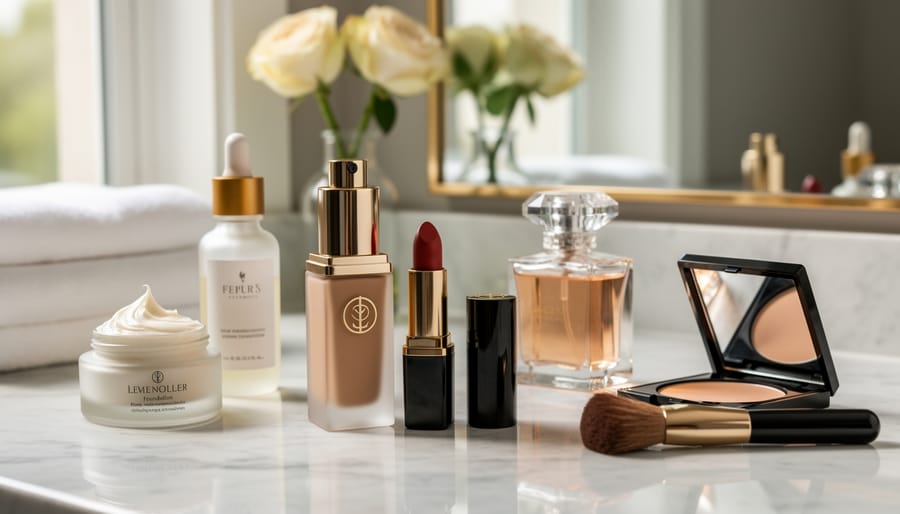
Walking into a beauty store these days feels like navigating two completely different worlds. On one side, you’ve got your everyday picks at accessible prices; on the other, sleek counters displaying bottles that cost more than your weekend brunch tab. But what actually makes a lipstick “prestige” beyond the price tag?
Let’s break it down. Prestige cosmetics occupy the luxury tier of the beauty market, and it’s about way more than slapping a higher number on the packaging. These brands typically retail at premium prices, think $40 foundation instead of $15, $35 lipsticks rather than $10. But that premium comes with specific promises.
- Premium Ingredients
- Prestige brands often use higher concentrations of active ingredients, rare botanical extracts, and advanced formulations that undergo extensive research and development.
- Luxury Pricing
- Products typically start at $30-40 for colour cosmetics and climb significantly higher for skincare, positioning them as investment purchases rather than impulse buys.
- Exclusive Distribution
- You won’t find these brands everywhere, they’re selective about retail partnerships, often appearing only in department stores, specialty beauty retailers, or their own boutiques.
- Brand Heritage
- Many prestige names carry decades of history and cultivate strong brand identities tied to founders, luxury parent companies, or celebrity creators like Pat McGrath Labs.
- Innovation Leadership
- These companies invest heavily in R&D, often introducing groundbreaking formulas, textures, and technologies that eventually trickle down to mass-market brands.
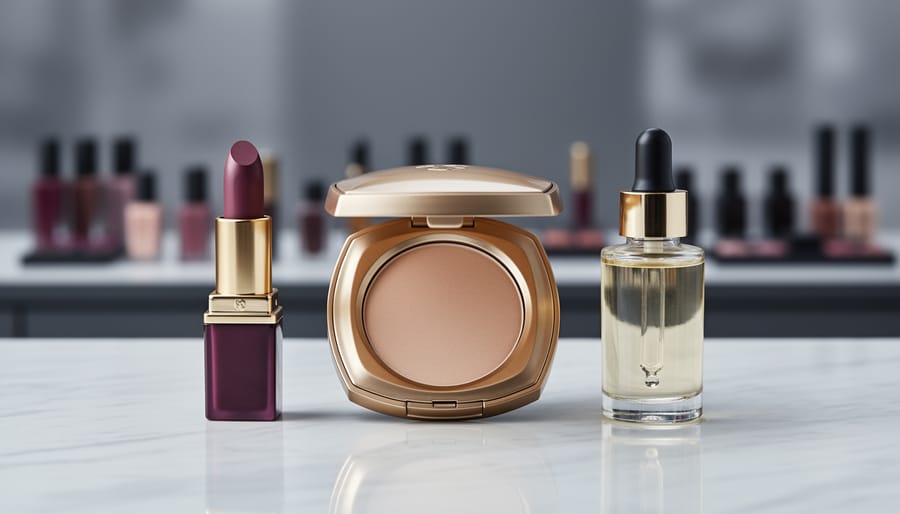
The packaging tells part of the story too. Prestige cosmetics arrive in weighted compacts, glass bottles, and magnetic closures that feel substantial in your hand. It’s tactile luxury that signals you’re holding something special.
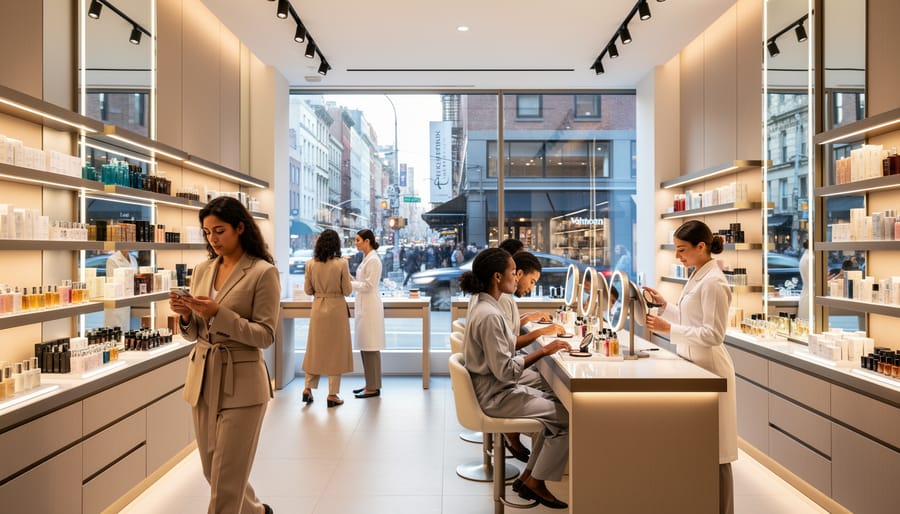
Here in Toronto, the Holt Renfrew beauty hall exemplifies how prestige beauty creates an experience, not just a transaction. These aren’t grab-and-go situations. You’re getting personalized consultations, testing textures on your actual skin tone, and walking away with samples in tiny jars that somehow feel precious.
But retail exclusivity is shifting. While prestige brands traditionally lived behind department store glass counters, the landscape is evolving. Some luxury names now appear in unexpected spaces, testing whether they can maintain their aspirational appeal while reaching more customers.
What hasn’t changed? The aspirational element. Prestige cosmetics sell a feeling, that you’re treating yourself to something expertly crafted, that using it elevates your routine from mundane to luxurious. Whether that’s worth the investment is entirely personal, but understanding what you’re actually paying for makes the decision clearer.
The Prestige Beauty Market Is Exploding (And Here’s Why)
The prestige beauty market isn’t just growing, it’s absolutely booming, and the numbers tell a story that affects what you see on shelves and how brands are fighting for your attention. When major players like Procter & Gamble reported that the global prestige beauty market hit $70 billion with projections to reach $90 billion within five years, it became clear this wasn’t a niche luxury segment anymore. It’s a massive, fast-moving industry where even established consumer goods giants are scrambling to grab market share.
In the U.S. alone, prestige beauty sales topped $4.3 billion in a single quarter back in 2019, marking a 2% increase year-over-year. That might sound modest, but in an industry this size, those percentage points translate to hundreds of millions of dollars shifting toward higher-end products. What’s fascinating is that this growth happened even as economic uncertainty loomed, proving that consumers actively choose to spend more on beauty when they believe the quality justifies the price.
So why are we all suddenly willing to drop serious cash on a foundation or lipstick? Social media rewrote the rules completely. When influencers demonstrate products in real-time and beauty communities dissect every formula ingredient by ingredient, the value proposition becomes crystal clear. You’re not just buying a product, you’re investing in something that performs, photographs well, and aligns with your personal brand. The self-care movement amplified this shift, reframing luxury beauty as a form of wellness rather than vanity.
Toronto’s beauty landscape reflects this evolution perfectly. The city’s Glow Hall updates and similar retail experiences cater to shoppers who want to touch, test, and understand products before committing. There’s also a quality-over-quantity mindset taking hold, people would rather own ten exceptional products than fifty mediocre ones cluttering their bathroom counter.
The prestige boom also signals a maturation of beauty consumers. We’ve learned to read ingredient lists, recognize marketing hype, and demand transparency. When a brand charges premium prices, we expect premium results, ethical sourcing, and formulations that actually deliver on their promises. That accountability is reshaping which companies thrive and which ones get left behind.
The Big Players Making Major Moves
The prestige beauty world isn’t just growing, it’s consolidating, and the biggest names are making chess moves that’ll reshape where you shop and what ends up in your makeup bag.
Pat McGrath Labs, the billion-dollar brand built by the legendary makeup artist herself, recently entered a formal sale process. Once valued at over $1 billion, the indie prestige powerhouse that dominated runways and red carpets is now exploring what comes next. And Pat McGrath herself? She’s taken on a new role as Creative Director of La Beauté Louis Vuitton, bringing her transformative vision to one of fashion’s most iconic luxury houses. It’s a shift that signals where prestige beauty is headed, toward tighter integration with established luxury conglomerates that have the resources to scale globally.
Then there’s Procter & Gamble, a company you probably associate more with household staples than high-end lipstick. P&G has been aggressively pursuing a bigger slice of the prestige cosmetics market, recognizing that this segment is growing faster than mass-market beauty. According to P&G’s own projections, the prestige beauty market hit $70 billion globally and was estimated to reach $90 billion within five years. That kind of growth attracts serious players, and legacy corporations are investing heavily, not just in product development but in acquiring indie brands and overhauling their approach to clean beauty manufacturing and sustainable packaging to meet evolving consumer expectations.
What does this all mean for you as a shopper? Expect more prestige brands landing in unexpected places, bigger marketing budgets pushing them into your social feeds, and potentially more innovation as corporations pour resources into premium formulations. The trade-off? Some of that indie, founder-led magic might get diluted as business priorities shift. The prestige beauty landscape is becoming more corporate, more strategic, and more about market share than ever before.
Where Prestige Meets Accessibility: New Distribution Channels

The prestige beauty world is pulling off a tricky balancing act right now, making luxury cosmetics easier to find while keeping that special “I’m treating myself” feeling intact. It’s happening in ways that would’ve seemed impossible a few years ago.
Take Joe Fresh Beauty launching in Shoppers Drug Mart. Suddenly, you can grab your prescriptions and browse genuinely elevated beauty products in the same trip. This isn’t about dumbing down luxury, it’s about meeting people where they actually shop. For Toronto beauty lovers, this shift is huge. You don’t need to trek to Holt Renfrew or book a Sephora appointment to access quality formulations anymore.
But here’s where it gets interesting: these brands aren’t sacrificing their luxury identity. The packaging still feels premium, the price points remain higher than mass-market alternatives, and the product quality stays consistent. What’s changed is the gatekeeper model. Prestige cosmetics companies realized that exclusivity doesn’t have to mean inaccessibility.
This distribution evolution means different things depending on your neighbourhood. Downtown Toronto shoppers might still prefer the full luxury retail experience at Yorkdale or Eaton Centre, while those in the suburbs can now explore prestige options during regular drugstore runs. The democratization isn’t about lowering standards, it’s about removing unnecessary barriers.
The trade-off? Some argue that finding your favourite luxury lipstick next to toothpaste diminishes the magic. Others celebrate finally being able to test products without feeling intimidated by marble counters and severe sales associates. Either way, the prestige beauty landscape in 2026 looks nothing like it did even five years ago, and that accessibility shift is fundamentally reshaping how we discover and buy luxury cosmetics.
How to Navigate the Prestige Beauty World Without Breaking the Bank
Let’s be real, prestige beauty can feel like a luxury reserved for those with unlimited budgets. But you don’t need to drain your savings to enjoy high-end cosmetics. The trick is knowing where to invest and where to save.
Start by identifying hero products that deliver results you can’t replicate at a lower price point. Think foundations with complex undertones that match your skin perfectly, or serums with cutting-edge formulations. These are worth the splurge because they genuinely perform differently than drugstore alternatives.
Here’s how to build your prestige collection without financial stress:
- Begin with one or two signature products rather than a full routine, a beloved lipstick or transformative mascara can elevate your entire look
- Watch for launch promotions and birthday perks from beauty retailers, which often include generous samples of prestige products
- Mix high and low strategically, pair that $60 foundation with a $12 mascara if the cheaper version works just as well
- Focus on quality over quantity by investing in versatile shades and formulas you’ll actually use daily
If you’re navigating cross-border beauty shopping, check out this buying guide in Canada for tips on making international prestige purchases work for you.
Toronto’s beauty scene offers plenty of opportunities to test before you buy. Visit counters at Holt Renfrew or Sephora to sample products, ask for expert colour matching, and request samples to try at home. Staff can often point you toward travel sizes or sets that let you experience prestige formulas at a gentler price point.
The prestige beauty world isn’t an all-or-nothing proposition. You can dip your toes in gradually, building a curated collection that reflects your personal style without compromising your budget.
The prestige cosmetics landscape is transforming right before our eyes, and honestly? This is the most exciting time to be a beauty enthusiast. We’re watching legendary figures like Pat McGrath take on new creative leadership roles while the market itself surges toward that projected $90 billion milestone. What used to feel like an exclusive club reserved for splurges at high-end department stores now exists in this fascinating middle ground where luxury meets accessibility.
Here’s what really matters: you don’t need to choose between loving prestige beauty and staying financially smart. The evolution we’re seeing means more options, better distribution, and smarter ways to engage with the brands you admire. Maybe you invest in one incredible foundation that makes you feel like a million bucks, then balance it with accessible gems for everything else. Maybe you wait for the launches that genuinely excite you instead of chasing every release.
The beauty industry’s growth isn’t slowing down, which means brands will keep competing for your attention and your dollars. Let that competition work for you. Stay curious, ask questions about what you’re actually getting for the price, and build a collection that reflects your real life, not someone else’s Instagram fantasy. The power here is yours. You get to decide what prestige means in your beauty routine, and that’s exactly how it should be.