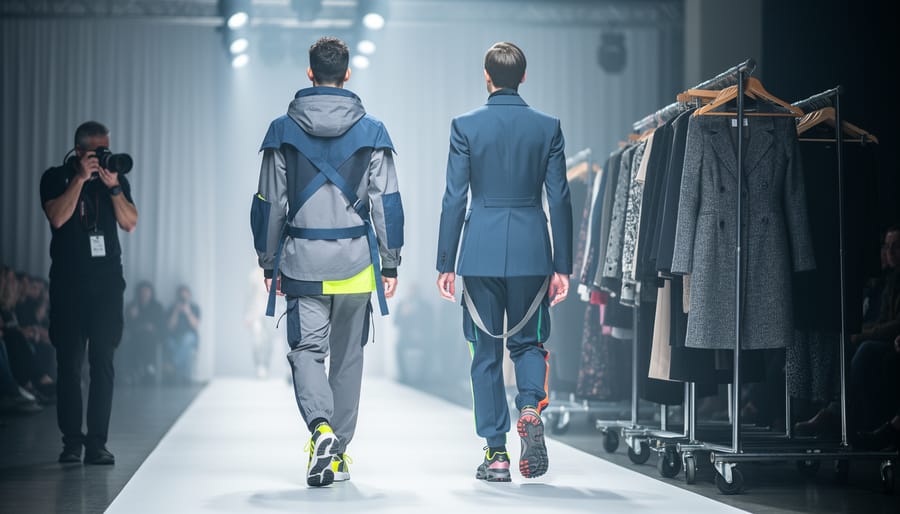
Vancouver Fashion Week is a biannual fashion event held in Vancouver, British Columbia, that showcases emerging and established designers from around the world through runway shows, presentations, and industry networking opportunities. Unlike the Big Four fashion weeks (New York, London, Milan, and Paris), VFW positions itself as a platform specifically designed to spotlight fresh talent and independent labels, often serving as a launching pad for designers who haven’t yet broken into the major international circuits.
For anyone trying to decode what’s next in fashion, Vancouver Fashion Week matters because it operates as an early warning system for trends. The designers who show here tend to take bigger risks than their counterparts at more established events, which means the runways often preview silhouettes, color palettes, and styling approaches that won’t hit mainstream retail for another six to eighteen months. You’ll spot experimental streetwear hybrids, sustainable fabric innovations, and cultural influences from the Pacific Rim before they become editorial darlings elsewhere.
This guide breaks down exactly how Vancouver Fashion Week functions, from the different show formats you’ll encounter to how the event’s unique structure shapes the trends that emerge from it. Whether you’re planning to attend, follow along digitally, or simply want to understand how regional fashion weeks influence what eventually lands in your favorite stores, you’ll learn how to identify the trend signals that matter and translate runway moments into real-world style inspiration.
What Vancouver Fashion Week Actually Is
Vancouver Fashion Week is a biannual fashion event held in Vancouver, British Columbia, that brings together emerging and established designers from around the world to showcase their latest collections on the runway. Unlike many fashion weeks that focus primarily on established labels, VFW has carved out a unique niche as a launchpad for up-and-coming talent, giving designers from diverse backgrounds their first major platform to present their work to industry insiders, media, and fashion enthusiasts.
Founded in 2001 by Jamal Abdourahman, Vancouver Fashion Week started as a modest local event with just a handful of designers. It’s grown exponentially over the past two decades, now attracting participants from over 20 countries and drawing thousands of attendees each season. The event typically runs for about a week twice a year, once in spring/summer and again in fall/winter, mirroring the traditional fashion calendar.
- Runway Show
- A live presentation where models walk down a catwalk wearing a designer’s collection, typically accompanied by music and dramatic lighting to create an immersive brand experience.
- Emerging Designer
- A fashion creator who is relatively new to the industry and hasn’t yet achieved widespread commercial recognition, often showing at events like VFW to gain exposure and connect with buyers.
- Buyer
- A retail professional who attends fashion weeks to discover and purchase collections for their stores, playing a crucial role in determining which designs make it to market.
- Fashion Forecast
- The practice of predicting upcoming trends based on runway presentations, street style, and cultural shifts, which buyers and brands use to plan their future offerings.
What sets VFW apart is its commitment to accessibility and diversity. While major fashion weeks in New York, Paris, and Milan can be notoriously exclusive, Vancouver Fashion Week maintains a more democratic approach, offering public tickets alongside industry passes. This philosophy extends to the designers selected, VFW actively seeks out voices from underrepresented communities and regions that don’t traditionally get spotlight time in the fashion world, making it a genuinely global showcase of emerging creativity.
How Vancouver Fashion Week Works
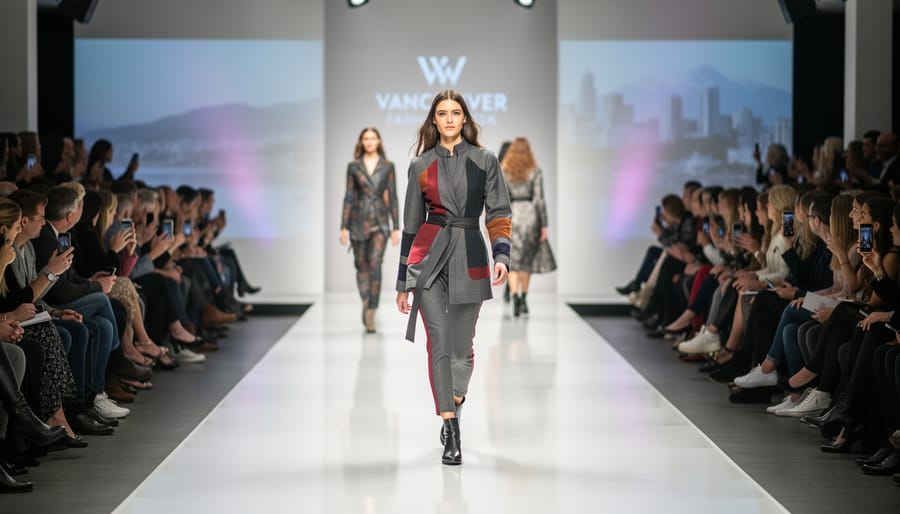
The Designer Journey
Getting onto the runway at Vancouver Fashion Week starts months before the actual event. Designers submit applications through VFW’s website, typically including a portfolio of previous work, sketches or lookbooks of their proposed collection, and information about their brand vision. The selection committee reviews hundreds of applications each season, looking for originality, craftsmanship, and designers who bring something fresh to the platform.
Once accepted, the real work begins. Designers spend roughly three to six months finalizing their collections, sourcing fabrics, perfecting patterns, and coordinating with seamstresses or production teams. Most showcase between 8-12 looks during their allocated runway time, which usually runs about 7-10 minutes. They handle everything from model casting and fittings to styling accessories and coordinating hair and makeup.
Behind the scenes, designers work closely with VFW’s production team on technical details: music selection, lighting cues, and the precise running order. First-time participants often find the logistics challenging, but VFW provides guidance throughout. The payoff comes when their vision walks the runway in front of industry buyers, media, and an audience that can genuinely launch emerging careers.
The Audience Experience
Vancouver Fashion Week offers a surprisingly accessible fashion event compared to the exclusive invite-only shows dominating other fashion weeks. If you’re an industry professional, buyer, stylist, journalist, you’ll spend the week rushing between shows with your press pass, scouting talent, making notes on standout pieces, and networking in the VIP lounges between presentations. The energy is electric, the coffee flows constantly, and you’ll exchange more business cards than you thought possible.
For fashion enthusiasts with public tickets, the experience feels like stepping behind the velvet rope. You’ll claim your seat in the general admission section (arrive early for better spots), watch collections debut on the runway, and catch glimpses of local influencers and designers mingling. The atmosphere buzzes with excitement as models hit the runway, and you’re genuinely seeing collections before they reach stores. Between shows, you can explore sponsor booths, snap street-style photos in the venue’s designated areas, and feel the rush of being part of a legitimate fashion industry event, not just observing from Instagram afterwards.
Types of Shows and Presentations at VFW
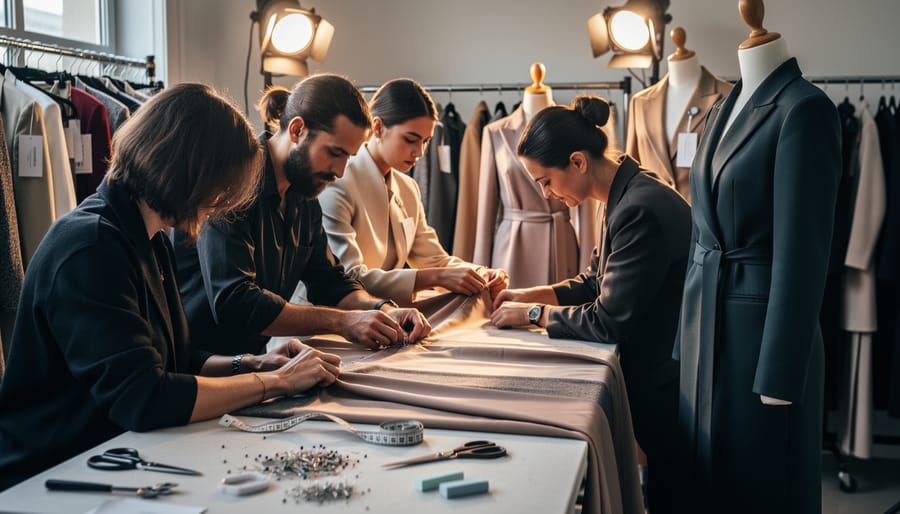
Vancouver Fashion Week isn’t a one-size-fits-all runway marathon. The event organizes its programming into distinct show types, each designed to spotlight different aspects of fashion and serve specific industry needs.
Main Runway Shows anchor the schedule. These are the polished, full-production presentations where established and mid-career designers unveil complete seasonal collections. Think dramatic lighting, curated music, and 20-30 looks that tell a cohesive style story. These shows typically run 10-15 minutes and draw the biggest crowds of buyers, media, and influencers. They’re where designers make their most ambitious creative statements.
Emerging Designer Showcases operate on a slightly smaller scale but pack just as much energy. VFW built its reputation on giving unknowns a platform, and these segments group 3-4 up-and-coming talents into a single presentation. Each designer gets a condensed runway slot to show 8-12 pieces. It’s fast-paced and risk-taking, you’ll see experimental silhouettes and bold ideas that haven’t been watered down by commercial considerations yet.
The Sustainable Fashion Segment has become a cornerstone of VFW’s programming, reflecting the industry’s shift toward eco-consciousness. Designers in this category showcase collections made from recycled materials, organic fabrics, or innovative textiles like mushroom leather or ocean plastic. These presentations often include brief talks about the designers’ sustainable practices, turning the runway into an educational moment.
Accessory and Specialty Presentations round out the week. Jewelry designers, bag makers, and shoe creators get dedicated spotlight moments, sometimes displayed on models during other shows or in static presentations between runway segments. VFW also programs themed collections, Indigenous designer showcases, avant-garde art-fashion crossovers, or culturally specific segments that celebrate diverse design perspectives.
Each format serves a purpose: discovery, education, commerce, or pure creative expression. Together, they create a layered event that speaks to different corners of the fashion world.
How Vancouver Fashion Week Influences and Reflects Fashion Trends
From Runway to Real Life
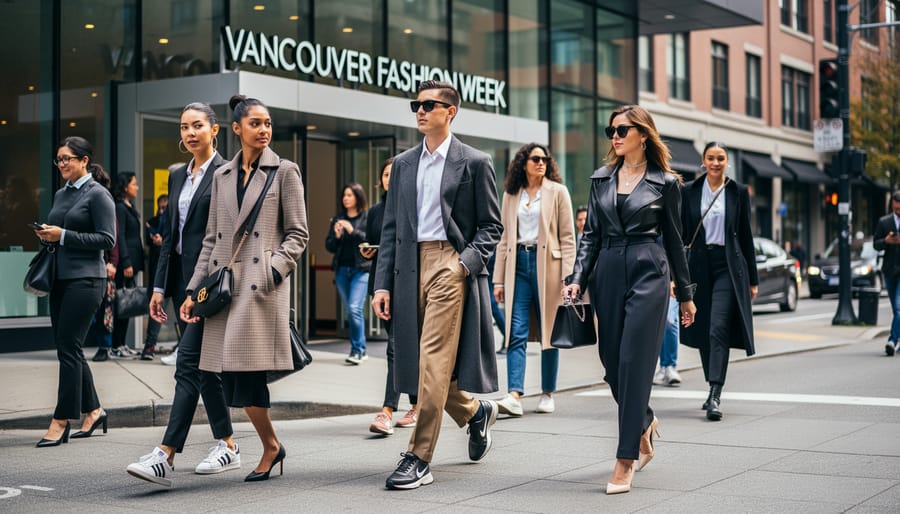
Vancouver Fashion Week might spotlight avant-garde runway pieces, but the real magic happens when those bold concepts translate into wearable, everyday looks. Within weeks of VFW shows closing, you’ll spot diluted versions of standout trends filtering through Toronto’s Queen West and Vancouver’s Gastown, oversized silhouettes become relaxed blazers, experimental layering inspires street-style pairings, and statement accessories shrink into subtle nods.
Take the outdoor apparel trends that dominated recent VFW showcases: designers presented technical fabrics and utilitarian details on the runway, which quickly morphed into cargo pants with sleek tailoring and weather-resistant jackets styled for city commutes. The colour palettes debuted at VFW, think earthy neutrals mixed with unexpected pops, show up in fast-fashion drops and independent boutiques within the season.
Street-style photographers capture this translation in real time, documenting how attendees remix runway inspiration with thrift finds and accessible basics. A model’s dramatic coat becomes a vintage trench layered over a hoodie; intricate textile work inspires DIY embellishments. This cycle proves VFW’s influence extends far beyond industry insiders, shaping how everyday fashion enthusiasts dress months after the final runway bow.
The Sustainability and Innovation Focus
Vancouver Fashion Week has carved out a reputation as a launchpad for sustainable innovation in fashion. The event consistently features collections that push boundaries with recycled fabrics, bio-based materials, and zero-waste construction techniques. Designers showcasing plant-based leathers, upcycled textiles, and regenerative fibers often generate significant buzz, signaling to buyers and retailers that eco-conscious design is moving from niche to necessary.
This sustainability focus creates a ripple effect across the industry. When emerging designers present viable, beautiful alternatives to conventional materials on the VFW runway, they prove that environmental responsibility doesn’t require aesthetic compromise. The event’s platform amplifies these innovations, much like how clean beauty trends have reshaped cosmetics manufacturing. Brands and buyers pay attention, translating runway experiments into retail reality within months.
The innovation extends beyond materials to production methods. VFW highlights designers employing 3D knitting, digital printing that minimizes waste, and made-to-order models that challenge fast fashion’s overproduction problem. These aren’t just feel-good talking points, they’re practical solutions gaining traction with consumers who increasingly vote with their wallets for planet-friendly fashion.
Why Fashion Enthusiasts and Industry Insiders Attend VFW
Vancouver Fashion Week pulls a diverse crowd, and everyone walks away with something different. Industry buyers and retailers show up to spot the next big thing before it hits mainstream stores, they’re scanning runways for fresh silhouettes, unexpected fabric treatments, and designers worth stocking. For them, VFW is a scouting mission that shapes their buying decisions for upcoming seasons.
Designers and creatives treat the event as a masterclass in real-time inspiration. Watching how other designers solve construction challenges, style their models, or incorporate K-beauty inspiration into their looks sparks ideas that filter back into their own work. The cross-pollination happens everywhere, in the shows, backstage conversations, and even observing how makeup artists translate concepts into beauty for runway looks.
- Buyers identify emerging designers and products to stock before competitors discover them
- Designers gain technical inspiration from construction methods and styling approaches
- Media and influencers capture fresh content and trend stories for their audiences
- Fashion students study industry processes and make connections that launch careers
- Style enthusiasts preview what they’ll be wearing six months from now
Influencers and media professionals are there for content gold, runway shots, backstage access, designer interviews, and street style captures that fuel weeks of posts and articles. VFW gives them timely material that positions them as fashion authorities to their followers.
Fashion students and enthusiasts get something less tangible but equally valuable: education through immersion. You can’t replicate the energy of a live runway show or the insight from chatting with a designer post-presentation. For Toronto fashion lovers who make the trip, it’s a chance to see how Vancouver’s creative scene operates differently from home, broadening their understanding of Canadian fashion beyond one city’s perspective.
Getting Involved: How to Experience Vancouver Fashion Week
Getting involved with Vancouver Fashion Week doesn’t require industry credentials, there are multiple entry points for fashion lovers at different levels of commitment.
Ticket Options and Access
VFW offers tiered ticketing to accommodate various budgets and interests. General admission tickets typically range from $50-$75 for individual shows, giving you a seat at runway presentations and access to the venue’s public areas. Multi-day passes ($200-$300) unlock several shows throughout the week, offering better value if you plan to attend multiple events. VIP packages ($500+) include premium seating, backstage access, and invitations to exclusive after-parties and industry mixers. Student discounts are usually available with valid ID, making the event more accessible to fashion program enrollees.
Volunteer Opportunities
If you’re budget-conscious but eager to experience VFW from the inside, volunteer positions offer behind-the-scenes access. Volunteers assist with guest check-in, backstage coordination, and venue setup in exchange for show access and networking opportunities. Applications typically open 2-3 months before the event through VFW’s official website.
For Aspiring Designers
Emerging designers can apply to showcase collections through VFW’s designer application portal. The process involves submitting a portfolio, collection concept, and application fee. Selected designers receive runway time, production support, and media exposure, a launching pad for careers.
Remote Engagement
Can’t make it to Vancouver? Follow @VanFashionWeek on Instagram and TikTok for real-time runway coverage, street style highlights, and trend commentary. The official website often streams select shows, letting you catch the action from anywhere, much like researching and buying clean makeup online when you can’t visit stores in person.
Pro tip: Plan your schedule in advance. Shows run back-to-back, and popular presentations fill quickly.
Common Questions About Vancouver Fashion Week
When VFW takes place really depends on the seasonal schedule. The event runs as a twice yearly event typically in spring (March/April) and fall (September/October), though exact dates shift each year based on venue availability and the broader fashion calendar. If you’re planning to attend, checking the official VFW website a few months ahead is your best bet for confirmed dates and early-bird ticket releases.
Can anyone buy tickets to Vancouver Fashion Week?
Yes, VFW is open to the public with various ticket tiers available. You can purchase single-show tickets, day passes, or full-week access depending on your budget and interest level.
What should I wear to VFW shows?
There’s no strict dress code, but attendees typically dress creatively and fashion-forward. Think of it as your chance to experiment with trends and make a statement, street style photographers are everywhere.
How can I follow VFW if I can’t attend in person?
VFW maintains active social media channels with live updates, behind-the-scenes content, and runway highlights. Many shows also feature livestream options, making it easy to watch collections from anywhere.
How does Vancouver Fashion Week compare to New York or Paris Fashion Week?
VFW focuses heavily on emerging designers and sustainable fashion, offering a more accessible, discovery-oriented experience than the mega-industry events. It’s less about established luxury houses and more about finding the next wave of talent.
The beauty of VFW is its approachability. Unlike some fashion weeks where exclusivity reigns, Vancouver’s event welcomes fashion enthusiasts at every level, whether you’re an industry insider hunting for new talent or someone who just loves great design and wants to see it up close.