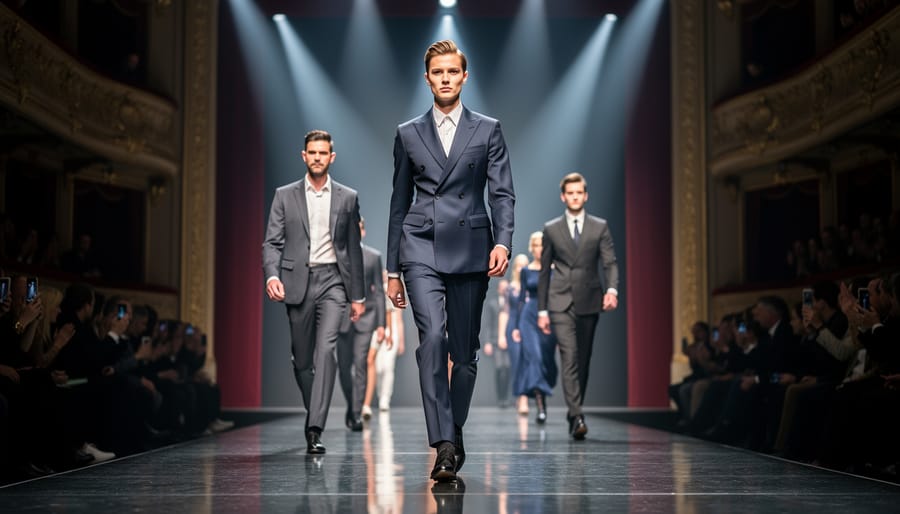
Milan Fashion Week is the twice-yearly showcase where Italy’s top designers present their upcoming collections to buyers, editors, and the world. Held each February and September in Milan, it’s one of the “Big Four” fashion weeks, alongside New York, London, and Paris. The fall and winter collections debut in the winter edition, spring and summer in the autumn one.
Think of it as the place where Italian craftsmanship, tailoring, and a love of polish go on full display. Runway shows run from morning to night, presentations pop up in palazzos and warehouses, and the sidewalks outside become a second runway, with attendees dressing to be photographed.
So why should you care, whether you’re in Milan or scrolling from Toronto? Because what walks down those runways shapes what lands in stores, and what gets spotted on the street shapes what we actually wear. This guide breaks down how Milan Fashion Week works, who’s in the room, how it differs from Paris, and how its ideas trickle down into your everyday closet.
What Milan Fashion Week Actually Means
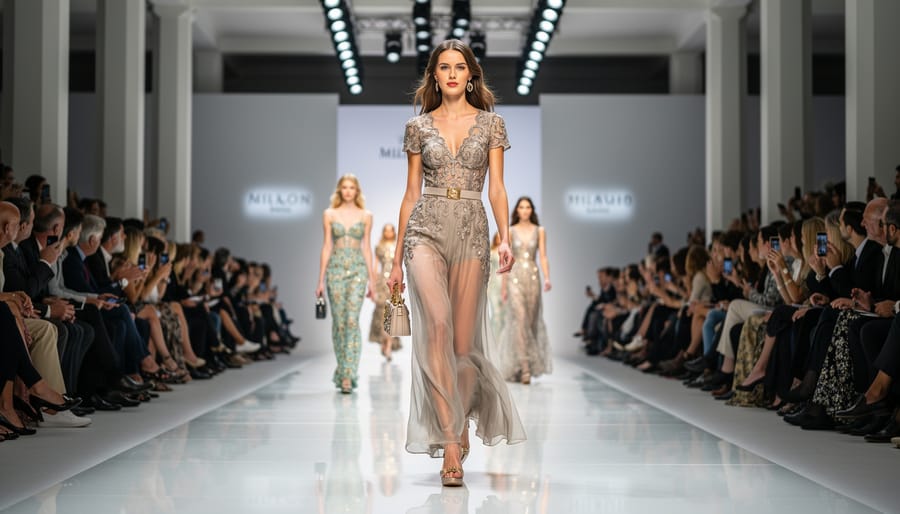
Think of Milan Fashion Week as fashion’s big preview party. Twice a year, the Italian city fills up with runway shows, presentations, and after-parties where designers and brands unveil womenswear and menswear collections to buyers, editors, stylists, and style-obsessed fans. It’s part trade event, part cultural moment, and part street-style carnival happening right outside the venue doors.
Here’s the key idea behind any fashion week: the clothes you see on the runway aren’t for sale yet. Collections debut months ahead of the season they’re meant for, which gives retailers time to place orders and gives the press time to build the buzz. If you’re curious about how that timing fits into the wider industry, this overview of the fashion week retail cycle breaks it down nicely.
So why does Milan get so much love? The city has a reputation for polished tailoring, serious craftsmanship, and design that feels bold without being impossible to wear. Think sharp blazers, beautifully made leather, and statement pieces you could actually picture on a Tuesday commute. If you want a quick snapshot of what the week typically involves, this Milan Fashion Week cheat sheet is a handy starting point.
The best part? You don’t need a front-row seat to enjoy it. Whether you’re a pro in the industry or just someone who loves putting together a great outfit, Milan’s runways are full of ideas worth borrowing.
How Milan Fashion Week Works, From Runway to Reality
The Players Behind the Scenes
Every fashion week runs on a crowd of people most of us never see on Instagram. Designers and their teams sit at the center, spending months sketching, sourcing fabric, and fitting garments long before anyone walks a runway. Stylists then pull the looks together, deciding which shoes, bags, and accessories finish each outfit.
On show day, models bring the clothes to life, while hair and makeup artists work backstage against a ticking clock. Casting directors choose who walks, and show producers keep the whole production on schedule down to the minute.
In the front rows, buyers from department stores and boutiques decide which pieces will actually reach shelves. Editors and journalists report on what they see, shaping the story the rest of us read. Add influencers and street-style photographers outside the venues, and you’ve got the full ecosystem: people creating, choosing, and sharing fashion at the same time.
From Catwalk to Closet
Runway looks rarely land in stores exactly as they walked. Designers show bold, sometimes theatrical pieces, then high-street and mid-market brands pick up the ideas that feel wearable: a softer shoulder, a particular shade of olive, a glossy leather texture. Within a season or two, those signals show up everywhere, from fast-fashion racks to your friend’s group chat.
Here’s how that looks in real life. A sharply tailored blazer on a Milan runway becomes a relaxed, oversized version you can throw over jeans. A rich burgundy shown in leather turns into a knit scarf or a pair of boots. Even a dramatic coat silhouette gets simplified into something that works on a streetcar.
Toronto style lovers have a secret advantage here, because layering is practically a local sport. Take a tailored Milanese-inspired blazer, add a thin merino knit underneath, a longer wool coat on top, and you’ve got polish that survives a 10-degree swing between morning and afternoon.
Milan vs. Paris: How the Two Fashion Weeks Compare
Think of Milan and Paris as two friends with very different wardrobes who show up to the same party. Milan has a reputation for craftsmanship, sharp tailoring, and luxe Italian materials: buttery leather, fine knitwear, silk that drapes just right. The look tends to be polished and confident, with a bold streak that still feels wearable on a Tuesday. Paris leans into its haute couture heritage and conceptual drama, where a runway can feel part theatre, part art installation, and the ideas often matter as much as the clothes.
Neither is “better.” They’re simply different flavours of the same obsession, and that’s the fun of watching them side by side.
They also sit right next to each other on the calendar, which is why fans tend to follow them as a pair. Once a season, the industry moves through its fashion weeks in sequence, and Milan and Paris land close together near the end of that run. If you’re scrolling from one to the other, you’ll notice the contrast in mood right away.
A few terms you’ll bump into while you follow along:
- Ready-to-wear
- Clothing made in standard sizes and sold in stores, as opposed to made-to-measure pieces. Most of what you see on the runway in Milan falls into this category.
- Couture
- Custom-fitted, handcrafted garments made for individual clients, long associated with Paris. Think extraordinary detail and serious artistry.
- Front row
- The prime seats closest to the runway, usually held for top editors, buyers, and guests of the brand.
- Showroom
- Where brands present collections up close to buyers so they can place orders for stores.
- Lookbook
- A curated set of photos showing how a collection can be styled, handy for borrowing outfit ideas.
- Street style
- The outfits guests and passersby wear outside the shows, often as influential as what happens on the runway.
Once you know these, the whole week gets a lot easier to follow, whether you’re team Milan, team Paris, or happily both.
How Milan Fashion Week Shapes What You Wear and Follow
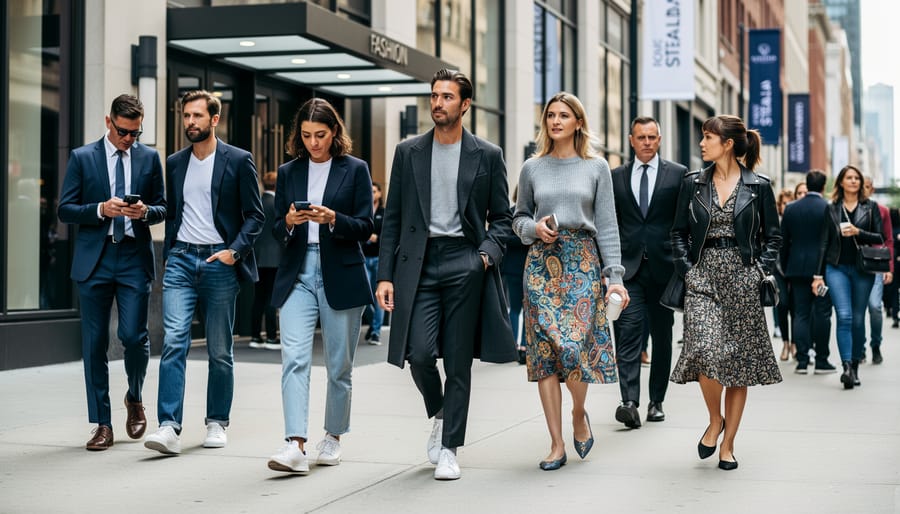
Milan Fashion Week isn’t just for the people in the front row. Its ripple effect shows up in your closet, your feed, and probably your next shopping list. The easiest way in is to treat it like a trend forecast: watch for repeated silhouettes, colours, and fabrics across several shows, because when the same idea pops up again and again, it usually sticks around.
Some of the best inspiration happens outside the venues. Street-style photographers capture what attendees actually wear on the sidewalks, and those real-life outfits are often easier to copy than anything on the runway. Following the week on social media, or browsing recaps from other fashion events like Vancouver Fashion Week, helps you see how different cities put their own spin on big ideas.
You don’t need a luxury budget to borrow the polish. Here are a few easy ways to bring Milan-inspired style into your wardrobe, and to follow along from afar:
- Try a sharp, well-fitted blazer that instantly sharpens jeans or a simple dress.
- Play with proportion by pairing something oversized with something sleek.
- Invest in quality accessories, like a good belt or bag, that elevate everything else.
- Mix textures, such as knit with leather or satin with denim, for depth without fuss.
- Follow show recaps, designer accounts, and street-style galleries online to watch it all unfold.
Toronto style lovers have a natural advantage here. Our city runs on layers, so Milanese tailoring fits right in. A structured coat over a chunky knit handles a freezing commute, a lightweight blazer carries you through patio season, and a polished scarf or boots can make a winter outfit feel intentional instead of just warm.
What makes street style so fun is that it never looks the same twice. People from every background bring their own culture, heritage, and personality to what they wear, and that mix makes the scene richer, both in Milan and on a Toronto streetcar. Take the ideas you love, then remix them until they feel like you.
Milan Fashion Week FAQs
Is Milan Fashion Week open to the public?
Mostly no. Runway shows are invitation-only for buyers, editors, stylists, and guests, though some brands now stream their shows or host open events around the city.
How often does Milan Fashion Week happen?
Twice a year, with separate weeks for womenswear and menswear. Collections are shown ahead of the seasons they’ll hit stores, so you’re always seeing what’s next.
How is it different from Paris Fashion Week?
Milan leans toward tailoring, craftsmanship, and luxe Italian materials, while Paris is known for couture heritage and conceptual drama. Both sit side by side on the calendar, so fans usually follow them as a pair.
Can you follow it online?
Absolutely. Many shows are livestreamed, and brands, editors, and street-style photographers post highlights in real time, so you can watch from anywhere, Toronto included.
Once you’re watching along, the fun part is spotting what sticks. A few of the looks you’ll see echo familiar moods, like the 2000s trend comeback, while others lean practical and weather-ready, which is where adventure outfit ideas can help you translate runway layers into real life. Runway beauty is worth a look too, and if you want to bring that polish home, these Toronto beauty picks are a good place to start.
So, what is Milan Fashion Week? It’s Italy’s twice-yearly runway moment, where designers preview their next womenswear and menswear collections and set the style conversation months before anything hits the racks. Alongside Paris, it forms part of the big back-to-back rhythm of the fashion calendar, with Milan bringing its signature polish, sharp tailoring, and love of beautiful materials.
You don’t need a front-row seat to enjoy it. Follow along online, scroll the street-style shots outside the shows, and notice what keeps catching your eye. Maybe it’s a crisp blazer, a bold pop of colour, or a clever way of layering.
Pick just one of those ideas and make it your own. Try it on a Toronto commute, a patio evening, or under a winter coat. Fashion is meant to be played with, so go have some fun with it.